The Indian rupee saw a significant appreciation against the US dollar following President Trump's suspension of military strikes against Iran and the Reserve Bank of India's decision to maintain its key interest rate. Market sentiment was further buoyed by positive comments from the RBI regarding the health of the banking sector.

In a bid to de-escalate Middle East tensions, the US has presented Iran with a comprehensive 15-point peace plan focusing on nuclear disarmament and regional stability in exchange for sanctions relief.

The embassy also said that the exit must be undertaken in coordination with the mission.

In view of the disruptive situations, the Central government has also announced a financial relief package of Rs 497 crores aimed at helping exporters affected by disruptions in West Asia.
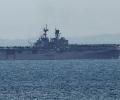
Although extensive air attacks have been carried out to destroy most of Iran's defence capabilities, the latter's resilience and sustenance during the war clearly indicate that the US landing force would encounter severe resistance in the operation, explains Commodore Venugopal Vengalil (retd).
Pakistan has rejected India's criticism of its military campaign in Afghanistan, calling India's statement 'baseless' and 'misleading'.

Amidst rising tensions, Iran threatens to close the Strait of Hormuz to those not adhering to its new regulations, signaling a potential escalation in the region's geopolitical landscape and raising concerns about global oil supply routes.

Tensions flared in East Asia on Saturday as the Japanese government issued an urgent warning following military activity from Pyongyang. The Prime Minister's Office of Japan, in a post on X, alerted the public to the developing situation, stating: '[Emergency alert] North Korea has launched a suspected ballistic missile. More updates to follow.'
The Punjab Police has requested the Centre to direct ZEE5 to halt the airing of the docu-series 'Lawrence of Punjab' on gangster Lawrence Bishnoi, citing a significant risk to public order and potential influence on youth towards criminal activities.
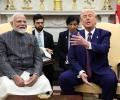
Prime Minister Narendra Modi and US President Donald Trump discussed the West Asia crisis and the importance of keeping the Strait of Hormuz open and secure. They also reviewed progress in bilateral ties and anticipated upcoming deals in the energy sector.

The Indian embassy in Tehran has earlier stated that it is facilitating the safe movement of nationals who wish to leave Iran.

The National Investigation Agency (NIA) will investigate the killing of two civilians in Manipur's Ukhrul district, following an ambush by suspected militants. The incident occurred a day after the Chief Minister appealed for peace in the region.

The deployment could include infantry and armoured units, in addition to the 82nd Airborne Division, which is already stationed in the region.

A tragic bomb attack in Manipur's Bishnupur district has killed two children and injured their mother, igniting protests and raising concerns about ongoing ethnic violence in the region.

The diplomatic intervention follows various media reports which attributed comments to Iranian lawmaker Alaeddin Boroujerdi, suggesting that merchant vessels were being charged USD 2 million for safe passage through the "conflict-hit Hormuz."

Russia's First Deputy Prime Minister Denis Manturov met with Indian leaders to discuss strengthening bilateral ties in key sectors amidst the escalating conflict in West Asia.

Data reveals a disturbing trend of Indian worker deaths abroad, particularly in Gulf nations, alongside numerous complaints of exploitation and labour rights violations.

Trump said that the strait will be "open very soon" if ongoing negotiations with Tehran continue successfully.

The UAE consulate in Erbil, located in Iraq's Kurdish region, suffered structural damage in the aerial attack. Officials said there were no casualties.
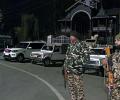
Twenty-one Tangkhul Naga civilians, detained by Kuki villagers and armed men in Manipur's Ukhrul district, were released following negotiations. Tensions remain high in the region.

The US has threatened to prosecute those buying or selling sanctioned Iranian oil and has announced a blockade of the Strait of Hormuz after peace talks failed.
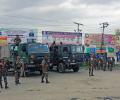
A woman sustained a gunshot wound in Manipur's Ukhrul district after suspected miscreants allegedly opened fire. The incident occurred in Mongkot Chepu village, a Kuki habitation, raising tensions in the region.

Foreign portfolio investors (FPIs) withdrew a substantial amount from Indian equities in the first half of March, driven by geopolitical tensions, rupee depreciation, and concerns about crude oil prices.

Historically, India was a major buyer of Iranian crude, importing significant volumes of Iranian light and heavy grades due to strong refinery compatibility and favourable commercial terms.

The US blockade on Iranian ports is aimed to curb Iranian energy exports, thereby crippling its economy to force Iran back to the negotiating table, points out Commodore Venugopal Menon (retd).

West Asia conflict triggers sharp sell-off in Indian markets, with realty, banking and auto stocks leading losses amid energy shock fears.

Pakistan's Prime Minister Shehbaz Sharif has engaged in extensive diplomatic efforts to de-escalate the conflict in West Asia, offering to host talks between the US and Iran and engaging with leaders from Saudi Arabia, Qatar, Malaysia, the UK, China, and the European Union.

A suicide car bomb attack on a police station in northwest Pakistan resulted in five deaths and thirteen injuries. The banned Tehreek-i-Taliban Pakistan (TTP) has denied responsibility, alleging the attack was orchestrated by state institutions.

Police in Amravati district, Maharashtra, have filed a case against former state minister Omprakash alias Bachchu Kadu for allegedly conspiring to kill the brother of a BJP MLA.
Precious metal prices surged in futures trading, with silver hitting Rs 2.93 lakh per kg and gold nearing Rs 1.68 lakh per 10 grams, driven by safe-haven demand following US-Israel strikes in Iran and retaliatory attacks.

India granted emergency docking to an Iranian ship, IRIS Lavan, in Kochi due to technical issues, accommodating its crew amidst regional naval activity and tensions.

Thousands in Manipur defy curfew to protest the bombing that killed two children, leading to clashes with security forces and widespread unrest.

A Border Security Force (BSF) convoy, including a vehicle carrying a DIG, was attacked in the Garo Hills region of Meghalaya, resulting in injuries and the burning of a vehicle. The incident occurred amidst ongoing unrest and clashes related to local elections, leading to the suspension of internet services and imposition of curfews.

Far from it; the country's resistance to the US, its nuclear ambitions, and its pursuit of influence and proxies across the Middle East are driven by a constant search for independence and security. Thus, Iran will never capitulate. Trump will learn this home truth ultimately, and it is going to be a humbling personal experience that may even destroy his presidency, predicts Ambassador M K Bhadrakumar.

Gold prices are expected to remain volatile next week as investors track geopolitical developments in the Middle East and key macroeconomic data releases that could shape the sentiment in the domestic market, analysts said.

Donald Trump shared a video on Truth Social purportedly showing explosions in Isfahan, Iran, following reports of attacks in Tehran. The authenticity of the video is unverified, but reports suggest a joint US-Israeli strike on an ammunition depot.

Russian President Vladimir Putin is actively working to de-escalate the escalating crisis in the Gulf, engaging with regional leaders following Iran's retaliatory strikes on US facilities after joint US-Israeli strikes against Iran.

Amidst escalating tensions in West Asia, India voices strong concerns over the safety of its nationals and the potential disruption to energy supplies, urging dialogue and diplomacy for a swift resolution.

The White House has responded cautiously to reports of Pakistan offering to mediate between the US and Iran, amid ongoing tensions and potential talks.

Trump criticised Iran for attempting to use international waterways for leverage, stating that the United States had restrained itself only to allow space for negotiations.
